This review is from: The Stolen Soul of Somita (Paperback)
I was very lucky to be recommended this by a colleague, as I had been looking for a gripping thriller ; The Stolen Soul of Somita certainly delivers. The book is an engrossing page-turner which oscillates masterfully between the normality of Western lives and the unflinching descent into a darker India, the India modernisation has bypassed, where superstition and occult practices retain deep roots in local communities. Mathadu is brave in acknowledging the cultural clash that unsettles his fully westernised protagonists. They need to grapple with questions about loyalty, family, filial devotion, state corruption, religious observance and post-colonial trauma. These themes brought to mind sagas such as Vikram Seth’s A Suitable Boy. Yet the pace of narration, suspenseful plot (not so much a whodunnit as a ‘whydunnit’) and plot twists place the Stolen Soul of Somita in the thriller genre, creating a very satisfactory read. Enjoy!
Earlier in the year I posted a blog about how Asian culture has influenced western music. This started me thinking about other forms of entertainment that have similarly merged the east and the west. There are three shows in particular that stand out that reflect the era that they were made in. The first show is ‘It Ain’t Half Hot Mum’, a show made in the 1970s.
The show was set in India and Burma during the last days of World War Two. The only two memories I have of watching this show was firstly Windsor Davies who played a Sergeant Major just shouting every line he had and the second was that an English actor was playing an Indian. The show portrayed a stereotypical view of Indians from the perspective of the west and showed that during the seventies the British still had not got over the fact that the empire was over.
Move forward to the nineties and the tables were reversed by the show ‘Goodness gracious me’. This show exploited the conflict between British born Indians and their integration within the west. Characters included, ‘The Coopers and The Robinsons’ who thought they were English, Chunky Lafunga a Bollywood actor trying to make it in the West, the Chav girls ‘Meena and Beena’ who reflected the social issues of the West. To me these characters were stereotyping against the English culture and getting one back for how they were portrayed in the seventies. The standout sketch from the entire show was the ‘Going for an English’ sketch where a group of Indians go to an English restaurant and turn the tables on the normal ‘going for an Indian’ joke.
Today Asians have finally learnt to laugh at themselves after years of being laughed at or trying to see where and how they fit into Western Culture. The current comedy ‘Citizen Khan’ makes fun of the Asian culture and all the stereotypical ingredients that we believe are a part of us. From being tight with money, the ideal of the ‘Man of the House’, the need to be accepted and have a high status within the community and our love of chillies are all part of this wonderful comedy.
Although focused on a Muslim family I can relate to many of the situations it creates. It is good to see that Asians have a sense of humor (although there have been many complaints) and can laugh at themselves.
I had a friend that lived about half an hour away from where I was staying during my second year at Bournemouth University. The guest house I was living in was about a ten minute walk away from Bournemouth train station and my friends flat was in the center of town on Westover Road. It was 1995 and the twin towers still stood with the world oblivious of the horrors to come. I would, at least four times a week, walk in the evening by myself to my friends flat and walk back alone in the early hours of the morning. ‘So what’ I hear you say, well indeed ‘so what’ as this sounds like a normal night out for a university student. But wait…I forgot to mention that I am a Sikh, a turban wearing Sikh. A turban wearing Sikh that many people today confuse for the Taliban.
I lived and studied in Bournemouth for two years and in all that time I was the only Sikh in the village. For the entire time spent in that part of the country I never once received any form of racism. The only time my ethnic origin was questioned was when I was sat on a park bench one day waiting for friends and a sweet old lady sitting next to me asked me, ‘so how long have you been in the country?’, she was astonished to discover that I was in fact born in London and as British as she was.
Looking back now I can’t believe that I escaped any racism and worse still a good beating. On my route back to my lodgings from my friends flat I had to pass a rowdy bar full of bikers who would by that time be spilling outside onto the pavement totally drunk. As I passed by I would innocently wave a hello to them and most surprisingly (looking back now) I received smiles and waves back.
One vivid memory that sticks in my mind is of a night when a group of friends and I visited a local pub. As we walked into the place there was that ‘American Werewolf in London’ moment where the two guys walk into the pub and everything goes quite and all eyes turn towards them. All eyes were on me as I causally walked up to the bar and ordered a pint. The place was full of those kind of people you see in a program about football hooligans and a punk band were tuning their guitars on a crappy little stage in the corner. Me being a total fool did not see any potential danger but my friends looked around rather nervously and decided that one pint in there would be enough and we moved on without any trouble. The point of this story I suppose is that I did not feel threatened because either I was a complete idiot or the state of the world in those days was less scarier.
Today I think twice about walking anywhere on more own late at night even in my home town where there is a large ethnic population. 9/11 and the subsequent wars have for me placed a spark of fear inside me that should not exist. I don’t think I will ever feel quite the same fearlessness walking past a bikers bar in the wee hours of the morning by myself which makes me rather sad.
Sitting at Gatwick Airport a few weeks ago waiting for my flight to Zakynthos I twiddled my thumbs as the rest of my family read their books. So not wanting to be the odd one out I made my way to WHSmiths and after much deliberation picked ‘And The Mountains Echoed’ by Khaled Hosseini. Not having read any of his other books my choice was made from the recommendation of Richard and Judy, and also by the film ‘The Kite Runner’.
As I started to read I prepared myself for the emotional roller-coaster that I had been promised by the reviews, and waited with tissue in hand to help wipe away the tears, and waited and waited and then waited some more. Until the last word on the last page I clung onto a futile hope that my heartstrings could still be yanked and my emotions would suddenly burst their banks. Alas nothing.
So my overarching view of the book is disappointment but that’s not to say that as an author I didn’t learn a lot from reading the book. The story I think lacks cohesion and also has a weak plot that doesn’t seem to ever go anyway. There were many mini stories within the main story that never got resolved so I was left with more questions than answers.
Leaving the plot to one side the two areas that had me captivated were firstly the way the author builds his characters and gives them life. The most fascinating character for me was Nila Wahdati and I would have been more than happy for the story to have focused more on her life. She perfectly captured that difficult synergy between West and East and the reasons why the two can never truly merge. The second area is the way he creates beautiful images of the places within his stories. The story travels to many destinations including Afghanistan, Greece and the United States. He perfectly captures the sense of those places and you can almost smell and feel the culture as you read.
I focused heavily on plot and action for my first novel ‘The Stolen Soul of Somita’, but for my next novel what I will attempt to achieve is more character development and try to emulate Khaled Hossien’s wonderful ability to place you right in the middle of some faraway place.
I recently saw a music review in Mojo magazine for an album by a Luke-Sital Singh called ‘The Fire Inside’. What first attracted me to the review was the name ‘Singh’ as this is also my middle name. All Sikhs have the middle name of Singh so I naturally assumed him to also be a Sikh. I have searched many sites to learn more about this artist but have yet to find any any information that confirms he has any Sikh heritage at all. There is a strong possibility that he has nothing to do with Sikhs as Singh is also a surname used in many other Indian communities such as Gujars, Rajputs, Kurmis, Bengali Hindus and Ahirs.
Once I had given up trying to discover more about this artist I decided to listen to his music and was half expecting to hear an Indian influenced album full of sitars, tablas and harmoniums. To my surprise and I must add a little disappointment this was a standard modern day singer songwriter album filled with guitars and heartbroken lyrics.
With the seed of disappointment planted in my head I started to list down those songs that I knew of that had crossed that divide between eastern and western music. The first song that popped into my head was Brimful of Asha by Cornershop. A delightful pop song from 1998 that paid tribute to the Indian singer Asha Bhosle. In contrast to Cornershop the band Babylon Zoo that was fronted by Jas Mann did not have any western influences in their one hit wonder ‘spaceman’. Unfortunately I have not been inclined to listen to any more of their songs to check if they used Indian instruments in any of their other songs.
Other songs to have Indian influences include Ton Petty and the Heartbreakers – ‘Don’t come around here no more’, The Rolling Stones – ‘Paint it Black’ and the Kinks – ‘See my friends’.
A favorite band of mine from the 90’s was Kula Shaker who had a very successful album called ‘K’ and had hit singles called ‘Govinda’ and ‘Tattva’ featuring lyrics in Sanskrit. The heavy Indian influence in the bands music was down to the lead singer Crispian Mills. After a spiritual pilgrimage to India he found a deep interest in Indian culture. He even named his band after one of the twelve saints of South India, King Kulashekhara.
The Indian instrument the harmonium has also been responsible to introducing me to one of my current favorite artists. Listening to absolute radio one day a heard the intro of Anna Calvi’s ‘Desire’ and thought mistakenly the station had started playing an Indian track. The fusion of the eastern and the driving rock sound gave the song a mystical quality that pulled me in and led me to discover more of her music.
As yet I have avoided naming the obvious but no article on the eastern influence within rock music is complete without mentioning the Beatles. George Harrison was the instigator and the main driver for the Indian influences into the Beatles music. It all stated during the recording of the video for ‘Help’ when some Indian musicians were playing in the background. For me the outstanding Indian influenced track from the Beatles was Sgt Peppers ‘Within You Without You’.
The song although from a Beatles album was played on by only George Harrison and a group of Indian musicians. Another George Harrison composition heavily influenced by India is ‘My Sweet Lord’ which was written as praise for the Hindu god Vishnu. Interestingly this track does not actually include any Indian instruments but creates Indian aspects by using slide guitars to represent the Indian musical instruments The Sarangi and the Dilruba.
On a final note there is one other popular piece of music that most people around the world will recognize and had its origins in Indian music. The James Bond theme started life as a musical composition called ‘Good Sign Bad Sign’ by Monty Norman. The song was part of a musical called ‘A House for Mr Biswas’ telling the story of an Indian community living in Trinidad. Monty Norman also wrote all the music for the first Bond movie ‘Dr No’. The producers of the James Bond movies were not happy with the theme from Dr No so conscripted John Barry to re-arrange the tune. This has caused all kinds of libel issues over the years on who actually gets credited for the theme.
If anyone does have any information about Luke-Sital Singh and his ethnic origin please post a comment below.
UPDATE 15/11/14
Just heard a song from a band called ‘Bombay Bicycle Club’ called Luna. I have heard songs from the band before but never before noticed the Indian influences. The Band are a British based band and use many styles of music but are predominately a guitar based group. I will infidelity be checking out more of their music. Check out the below video which is influenced by Bollywood.
Hotel India is a four part documentary currently running on BBC 2 that follows the lives of people working and living around one of the most famous hotels in India – The Taj Mahal Palace situated in Mumbai.
The most fascinating part of the first episode for me was the attitude of both the people working at the Taj and those that rely on its existence. The employees there felt privileged to work at such as prestigious hotel and it filled them with great pride. For them it was a way of earning respect from their friends and relatives. This was the case no matter what the position of the employee – Porter or General Manger. The motto for all employees was that the guest was ‘God’ and should be treated as such. This attitude I find in direct contrast to my experiences of working in the UK. In my role as an Operations Manager I manage over 40 employees and their general attitude is one of resentment towards their employer. I have never understood this view because my employer provides me with the means to provide for my family, socialize, attain luxuries and live a comfortable life.
The loyalty the Taj employees show their employee is a trait found in the older generation (no matter from what culture). An example of this is my dad who has recently retired after 45 years working for the same company. It sees to me that the current generation in the West has little loyalty and commitment.
My favorite quote from the episode was from a woman who lives in the street outside the Taj with her family said of the hotel – ‘It is both our Mother and Father’. What she means by this is that the hotel provides her and her family with the means to feed her family. She make strings of jasmine flowers that she sells to the tourists and the guests. The poor who rely on the hotel do not envy or despise the rich hotel guests but are thankful to them.
A regular guest to the hotel summed up the difference in attitude between the Indian people living around the Taj and to those from other countries. He said, ‘if you come out of the Hilton in Trinidad, they just say rich Bastard and they want to beat you up and kidnap you.’ but in Mumbai ‘they look at the Taj in awe not envy’.
So why the difference in mindset from the poor in India and from that of the West? Could it be because of the social welfare systems in the West. The poor in India are threatened with starvation, disease and even death on a daily basis. They must show respect towards the things that will help them keep these risks at bay. They have learnt that working alongside the rich will help them survive. In the West people are very rarely in danger of dying when they are out of work. They have the social welfare to fall back on and many are making more money from benefits than they would if they were working. No wonder they think they can treat their employees with disdain and little respect.
Visiting Zakynthos last week I was totally enchanted by the beautiful Greek Island and it’s people. I have very rarely met a more friendly and welcoming host.
The Island has amazing landscapes and glorious clear blue waters. Apart from the usual good food, sandy beaches, swimming pool and evening’s entertainment I was captivated by the Greek culture and it’s similarities to my own Indian culture. They are very family orientated and religion plays a big part in their every day life with 98% of the islands population devoted to the Greek Orthodox faith.
As with Indian culture superstition also plays an important role within their lives. When a Greek buys a new property, business, or builds an extension to their house they have it blessed by a priest. Garlic can be seen hanging in most business and homes to ward off the evil eye.
When paying a Greek a compliment you must pretend to spit on them three times to ward of the evil eye otherwise they worry that something bad will happen to the object that was complimented. For example if I admired a Greek’s new car, I would need to feign spitting on the car otherwise the owner would fear the car getting damaged. Wearing blue charms in the shape of an eye is another way to ward of the evil eye.
Carrying bat bones is seen as very lucky but a bat must not be killed as this is bad luck. As they are a very religious people, priests are revered but it is seen as bad luck if one is met in the street. If this does happen then the word ‘garlic’ must be whispered under ones breath. There are many more superstitions but most of them can be overcome by the saying the word ‘garlic’.
Superstitions common with the Western world include black cats and the number 13 (because of the thirteenth guest at Christ’s Last Supper), and superstitions common with Indian culture include upside down placed shoes which are seen as very bad luck and an omen that death is close.
There are many more Greek superstitions which I will not mention but to me this indicates that Greek people are very religious and have a good fear of the Gods. What I mean by good fear is that they strive to live a good an honest life for fear that otherwise the Gods will be cross with them.
To finish off I will mention just one more Greek superstition which rather made me chuckle, if you fall asleep under a Cypress tree it will steal your brains.
In my novel ‘The Stolen Soul of Somita’ the main protagonist discovers a box that has printed upon it some mysterious Sanskrit text. She tries in vain to discover what it means but because this ancient language is no longer widely used finds it hard to decipher the message. So what is Sanskrit and why have I used it in my novel?
Sanskrit is the ancient language of India and I was surprised to learn that it is part of the Indo – Aryan (Germanic) family of languages that include Greek and Latin. It first appears in the Vedas – the oldest scriptures of Hinduism in around 1500 BC. It is thought that all modern North Indian languages derive from Sanskrit.
Today it is the official language of only one Indian State – Uttarakand in North India. In other parts of India it is only used as part of religious ceremonies during rituals where hymns and mantras are performed. It is also used widely in the West in Yoga practices.
I used this ancient language in my novel to evoke a sense of mystery and the feeling of the supernatural. It also allowed me to include the use of ancient rituals that are seen as taboo in India today – you will have to read the novel to discover more!
I was fascinated recently to read an article on the BBC website that detailed how the new administration in India is trying to resurrect Sanskrit in schools. Please click on link to read article and let me know what you think.
 A masterful hybrid of family saga and detective story, 24 May 2017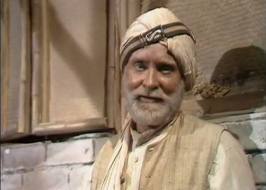
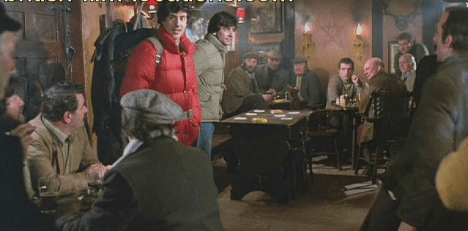 One vivid memory that sticks in my mind is of a night when a group of friends and I visited a local pub. As we walked into the place there was that ‘American Werewolf in London’ moment where the two guys walk into the pub and everything goes quite and all eyes turn towards them. All eyes were on me as I causally walked up to the bar and ordered a pint. The place was full of those kind of people you see in a program about football hooligans and a punk band were tuning their guitars on a crappy little stage in the corner. Me being a total fool did not see any potential danger but my friends looked around rather nervously and decided that one pint in there would be enough and we moved on without any trouble. The point of this story I suppose is that I did not feel threatened because either I was a complete idiot or the state of the world in those days was less scarier.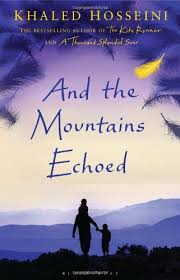



 Sanskrit is the ancient language of India and I was surprised to learn that it is part of the Indo – Aryan (Germanic) family of languages that include Greek and Latin. It first appears in the Vedas – the oldest scriptures of Hinduism in around 1500 BC. It is thought that all modern North Indian languages derive from Sanskrit.
 Harbinder Mathadu